request to quote
Leave Your Message

How to Choose the Best Portable Physiotherapy Equipment?

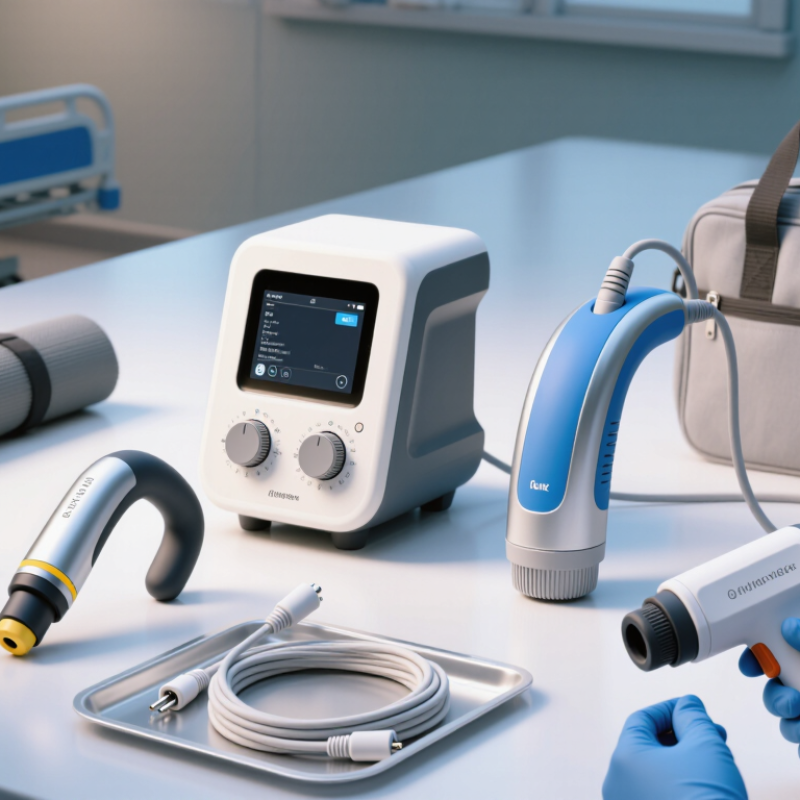
Choosing the best Portable Physiotherapy equipment requires more than comparing prices, features, or attractive product photos. It requires clinical judgment, practical testing, and evidence from reliable sources. The World Health Organization’s Rehabilitation 2030 initiative identifies rehabilitation as an essential health service, while its 2022 Global Report on Assistive Technology highlights growing demand for accessible, appropriate devices. These findings show why portable tools must support real patient needs, not merely follow market trends.

Industry research also signals continued expansion. Fortune Business Insights’ Physical Therapy Equipment Market analysis reports sustained growth, driven by home rehabilitation, outpatient care, and technology adoption. However, market growth does not guarantee clinical value. A compact electrical stimulation unit may fit inside a small treatment bag, yet its battery life, electrode quality, cleaning process, and control accuracy can determine daily usefulness. Small details matter.

Start with the treatment goal.

Clinicians should assess evidence, usability, durability, and regulatory status in the intended market. Equipment should be easy to transport between clinics, homes, and rehabilitation rooms. It should also include clear instructions, service support, and safety documentation. Standards from recognized medical-device authorities can help verify quality, but certification alone does not prove suitability for every patient.

A practical evaluation should include hands-on trials. Test the device with gloves, limited lighting, and a crowded treatment space. Check whether controls remain intuitive during a busy appointment. Some recommendations may appear obvious, but real-world experience often exposes overlooked weaknesses. A perfect checklist does not exist. The best choice balances clinical outcomes, portability, patient comfort, maintenance demands, and total ownership cost.
How to Choose the Best Portable Physiotherapy Equipment?

Understanding Portable Physiotherapy Equipment and Its Main Uses

Portable physiotherapy equipment includes small tools and powered devices used outside a fully equipped treatment room. Common examples include resistance bands, handheld dynamometers, goniometers, balance pads, massage tools, and compact electrical stimulation units. Each serves a different purpose. Bands support progressive strengthening. A goniometer records joint movement. Electrical stimulation may help selected patients manage pain or activate weak muscles, but trained assessment remains essential.

The main uses are rehabilitation, symptom management, movement testing, and guided home exercise. A therapist might use a balance pad after an ankle injury, then prescribe short sessions beside a kitchen chair. Heat or cold packs can support comfort when applied with skin protection and suitable timing. Portable devices should not replace clinical reasoning. A device can look professional and still be poorly matched to the patient.

Not always.

When choosing equipment, check its intended use, adjustability, cleaning instructions, battery reliability, and supporting evidence. Weight matters during travel, while clear controls help older adults and people with limited hand strength. I would also ask whether the patient can use it correctly without supervision. That question is often missed. In practice, simple equipment may produce better adherence than a complicated kit. Safety warnings, contraindications, and professional instruction deserve attention, especially with electrical, thermal, or high-resistance products. My preference could change after observing real use, because comfort, confidence, and technique are difficult to judge from a product description alone.
Assessing Patient Needs and Treatment Goals

Choosing portable physiotherapy equipment should begin with the patient, not the product. Assess pain, mobility, strength, balance, cognition, skin condition, and home safety. The treatment goal must be specific, such as climbing stairs, gripping a cup, or walking ten minutes without rest. The World Health Organization estimates that 2.4 billion people could benefit from rehabilitation worldwide. That figure shows the scale of need, but it does not justify one device for every patient.

Match the equipment to the intended movement and the patient’s tolerance. A light resistance band may support gradual strengthening, while a compact step platform may train controlled weight transfer. Measure progress with repeatable outcomes, including walking distance, sit-to-stand time, or pain during daily tasks.

31% The WHO’s 2022 Global Status Report on Physical Activity found that 31% of adults worldwide do not meet recommended activity levels.

Still, more exercise is not always better. Fatigue, swelling, dizziness, or poor technique can make a simple tool unsafe.

Clinical judgment remains essential. A physiotherapist should check setup, resistance, cleaning requirements, and whether the patient can use the equipment without supervision. Portability can improve adherence, yet small devices are easy to misplace or misuse. I have found that patients often prefer familiar, simple tools over sophisticated ones. That preference matters. Evidence may support a device, but individual response must guide its continued use. Reassess after several sessions, document changes, and admit when the chosen equipment is not helping.

Comparing Essential Features, Portability, and Ease of Operation

Choosing portable physiotherapy equipment starts with the treatment environment, not the product catalogue. A clinic room, home visit, and sports field require different compromises. WHO estimates that 2.4 billion people live with conditions that may benefit from rehabilitation. This growing need increases pressure on clinicians to deliver safe care beyond traditional clinics.

Weight matters, but it is only one part of portability. Check the handle, case, battery life, charging method, and space for accessories. A device that feels light for five minutes may become uncomfortable during several home visits.

Controls should be readable, tactile, and usable without complicated menus. Clear intensity displays can reduce adjustment errors, especially when therapists work quickly. Keep it simple.

Essential features must match the therapy. Look for adjustable output, stable performance, replaceable components, and easy cleaning surfaces. Safety information should be visible, and operating instructions should support consistent treatment between users.

The WHO and World Bank reported that people with disabilities may face limited access to health services, making reliable home-use equipment especially important. However, portability can tempt users to overlook clinical assessment. That is a real weakness.

Compact equipment still needs professional judgment, patient education, and routine maintenance. In practice, test the device while carrying it, setting it up, and explaining it to a patient. The awkward moments often reveal more than a specification sheet.

Checking Safety Standards, Durability, and Equipment Quality

How to Choose the Best Portable Physiotherapy Equipment?

Safety should guide every equipment decision, especially when devices touch patients directly. Check for recognized electrical safety testing and clear medical-device documentation. The paperwork matters. Confirm that the equipment meets regulations in your country and includes readable operating instructions. Look for emergency shutoff controls, insulated cables, secure battery compartments, and adjustable intensity settings. During a hands-on assessment, I test every control with gloves. Small buttons can become frustrating during a busy treatment session. Also inspect cleaning guidance, because smooth, sealed surfaces are easier to disinfect properly.

Durability is more than a strong outer case. Examine hinges, wheels, handles, connectors, and charging ports for looseness or weak construction. A device may feel solid but still fail at its most-used joint. Ask about drop testing, operating-temperature limits, battery cycles, and replacement parts. Check whether the warranty covers practical problems, not only manufacturing defects. I once focused too much on low weight and overlooked a fragile cable connection. That mistake changed my equipment checklist.

Equipment quality also depends on clinical accuracy and support. Verify calibration procedures, output consistency, and routine inspection requirements. A readable display helps therapists record settings without guessing. Manuals should explain contraindications, maintenance, and error codes clearly. Reliable suppliers should provide training and responsive technical assistance. Test the device on a stable surface and inside its carrying case. Listen for unusual noise. Feel for excessive heat. These simple checks often reveal weaknesses that specifications hide. Still, no inspection is perfect, and field performance can differ from showroom impressions.

How to Choose the Best Portable Physiotherapy Equipment? - Checking Safety Standards, Durability, and Equipment Quality

Equipment Category Main Safety Checks Relevant Standards to Verify Durability Indicators Quality Evidence to Request Portability Priority
TENS and NMES Devices Adjustable intensity, protected electrode connectors, automatic shut-off, clear contraindication information, and intact insulation. Check applicability of IEC 60601-1 for electrical safety, IEC 60601-1-2 for electromagnetic compatibility, and ISO 14971 for risk management. Replaceable cables and electrodes, secure battery compartment, impact-resistant housing, and controls that remain legible after repeated cleaning. Electrical safety documentation, user manual, cleaning instructions, calibration or functional-test procedure, and battery specifications. High
Portable Ultrasound Therapy Units Confirm output controls, treatment timer, transducer condition, thermal monitoring, and protection against unintended activation. Verify applicable IEC 60601-1, IEC 60601-1-2, ISO 14971, and manufacturer-specific performance testing for therapeutic ultrasound output. Sealed control panel, strain-relieved transducer cable, replaceable coupling-gel accessories, and documented output verification intervals. Output testing records, transducer inspection guidance, service intervals, operating-temperature limits, and warranty terms. Medium
Portable Hot and Cold Therapy Systems Temperature regulation, over-temperature protection, leak prevention, skin-contact inspection, and safe operating time. For electrically powered systems, verify applicable IEC 60601-1 and IEC 60601-1-2 requirements. For patient-contact materials, check relevant ISO 10993 information where applicable. Reinforced tubing, washable covers, corrosion-resistant fittings, durable insulation, and accessible replacement seals. Temperature accuracy data, leak-test instructions, cleaning protocol, material information, and replacement-part availability. Medium
Pneumatic Compression Devices Pressure-limit controls, correct garment sizing, hose connections, emergency release, and screening for vascular contraindications. Verify applicable electrical safety and EMC requirements under IEC 60601-1 and IEC 60601-1-2, together with documented risk management under ISO 14971. Pump cycle testing, reinforced seams, replaceable cuffs, reliable connectors, and resistance to repeated disinfection. Pressure accuracy data, cuff size chart, cleaning instructions, alarm-test procedure, and maintenance schedule. Medium
Handheld Dynamometers Non-slip grip, secure sensor mounting, clear measurement units, zeroing function, and safe patient positioning during testing. Check calibration procedures and measurement traceability. IEC 60601-1 may apply when the device is classified as medical electrical equipment. Load-rated sensor, reinforced casing, replaceable batteries, protected display, and documented overload tolerance. Calibration certificate, measurement range, accuracy specification, repeatability data, and recommended recalibration interval. Very High
Digital Goniometers Stable arms, readable display, secure locking mechanism, reset function, and smooth movement without sharp edges. Confirm measurement validation and calibration information. Electrical safety requirements may apply if the device includes powered electronic components. Hinges rated for repeated movement, scratch-resistant scale, protected electronics, and a housing that tolerates routine disinfection. Accuracy specification, calibration method, battery life, cleaning instructions, and drop or impact protection information. Very High
Resistance Bands and Tubes Inspect for cracks, surface tackiness, tears, overstretching, damaged anchors, and unsafe attachment points before every use. Verify applicable material-safety information and any relevant exercise-equipment testing documentation. Standards depend on the product design and intended use. Latex or synthetic material quality, consistent resistance, reinforced handles, secure clips, and resistance to sweat and cleaning agents. Resistance chart, material declaration, inspection and replacement guidance, maximum stretch recommendation, and storage conditions. Very High
Foldable Treatment Tables Check locking pins, leg stability, hinge security, working-load rating, anti-slip feet, and safe height-adjustment procedures. Verify applicable furniture, structural-load, and medical-use requirements according to the intended market and configuration. Reinforced frame, corrosion-resistant hardware, high-density cushioning, washable upholstery, and a clearly stated working-load limit. Static-load test information, assembly instructions, upholstery-care guide, replacement-part support, and inspection checklist. High
Portable Balance and Rehabilitation Tools Non-slip surfaces, stable base, appropriate user weight limit, rounded edges, and adequate clearance during movement exercises. Check applicable product-safety and load-testing requirements based on whether the equipment is classified as a medical device or general exercise equipment. High-grip surfaces, sealed foam or plastic, reinforced handles, resistance to repeated cleaning, and no deformation under the stated load. Maximum user weight, stability-test results, material declaration, cleaning instructions, and user-safety guidance. Very High
Selection rule: Treat standards as requirements to verify rather than automatic proof of quality. Confirm that the documentation applies to the exact model, intended use, electrical configuration, patient-contact materials, and market where the equipment will be used.

Choosing Equipment Based on Budget, Maintenance, and Support

How to Choose the Best Portable Physiotherapy Equipment?

Choosing Equipment Based on Budget, Maintenance, and Support

A practical budget should cover more than the purchase price. Include carrying cases, replacement pads, batteries, cleaning supplies, and staff training. I once underestimated these small costs, and the equipment became expensive within six months. That mistake changed how I compare portable devices.

Choose equipment that matches your treatment schedule and patient needs. A lightweight unit may suit home visits, while a stronger device may serve a busy clinic better. Check operating costs before judging the price. Ask about battery life, charging time, calibration, and replacement parts. Simple controls can reduce training time and prevent avoidable errors. Do not pay for features your team will rarely use.

Maintenance affects reliability. Look for clear cleaning instructions and accessible service information. Keep a written inspection log for cables, screens, connectors, and casing damage. Small faults can become serious during a patient session. Support matters just as much. Confirm the warranty period, repair process, response times, and training options. Reliable suppliers should provide technical documents and honest limitations. However, support promises can sound better than they work. Test the response before purchasing by sending specific questions. A delayed or vague reply deserves careful thought. My own selection process still has gaps, especially when staff preferences differ. That is useful feedback, not a failure. Reassess the equipment after several weeks of real use.