request to quote
Leave Your Message

How to Choose Portable Physiotherapy Equipment?

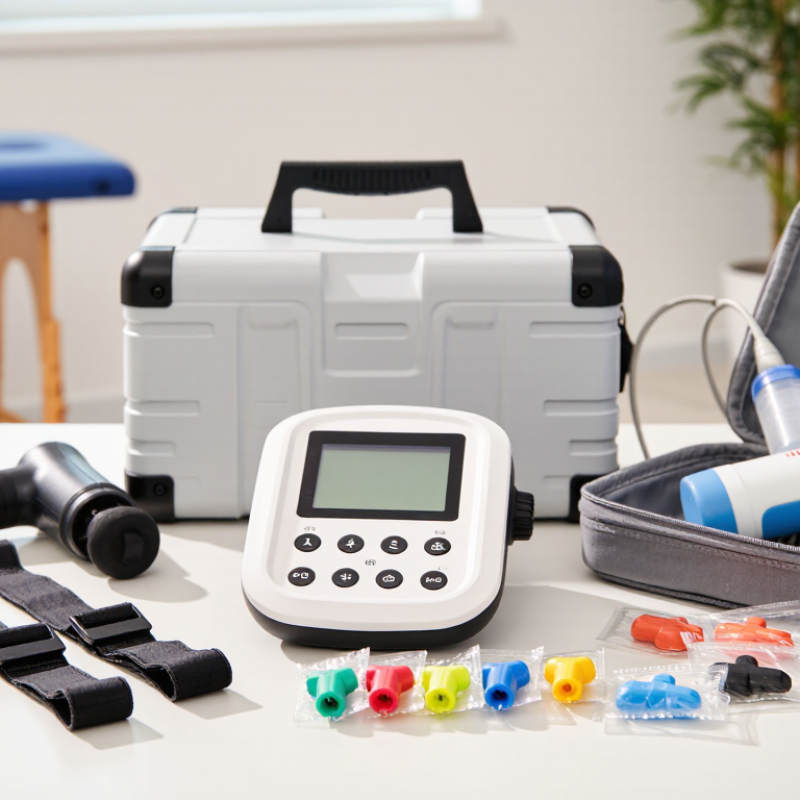
Choosing Portable Physiotherapy equipment is not simply a matter of selecting the smallest device. The right choice depends on clinical purpose, patient needs, treatment setting, and professional supervision. A compact muscle stimulator may fit inside a travel case, yet its controls could be confusing during a home session. A portable ultrasound unit may offer useful imaging, but only when trained professionals can interpret its results safely.

Look closely.

Physiotherapy educator David Butler writes, “Pain is an experience, not a sensation.” This reminder matters when evaluating electrical stimulation, heat therapy, massage tools, or recovery devices. Equipment should support assessment and rehabilitation, not promise instant pain relief. Evidence, build quality, battery performance, hygiene, and user training deserve equal attention. A device with impressive features may still be unsuitable for an older patient with limited hand strength.

Practical testing can reveal overlooked problems. Check whether the screen remains readable under bright clinic lighting. Examine how easily electrodes, straps, and cables can be cleaned. Confirm whether replacement parts are available. Review safety instructions, contraindications, and professional guidance before purchase. Portable Physiotherapy should improve access without weakening clinical judgment.

There is room for reflection.

Many buyers focus on portability first. That can be a mistake. A slightly heavier unit may provide better stability, stronger casing, and clearer controls. The best equipment is not always the newest model. It is the tool that fits the treatment plan, travels reliably, and helps the patient participate with confidence.

How to Choose Portable Physiotherapy Equipment?

Define Your Physiotherapy Goals and Treatment Requirements

Choosing portable physiotherapy equipment starts with the treatment goal, not the device itself. A patient recovering from knee surgery may need progressive resistance, balance practice, and swelling control. Someone with chronic back pain may need mobility exercises, posture feedback, and gentle muscle activation. The same equipment cannot serve both needs well. Define the affected body region, movement limitation, pain level, treatment frequency, and available space. Keep it practical.

The World Health Organization estimates that 2.4 billion people live with conditions that may benefit from rehabilitation (WHO, Rehabilitation 2030, 2023). This demand increases the need for safe, adaptable tools in homes, clinics, and community settings.

Choose equipment that supports measurable outcomes, such as range of motion, walking distance, grip strength, or pain-free repetitions. A resistance band may suit gradual strengthening, while a compact balance pad can challenge postural control. Check load limits, cleaning requirements, storage size, and adjustment options.

Safety comes before convenience. Review medical history, surgical restrictions, skin sensitivity, and fall risk with a qualified physiotherapist. Cheap does not always mean efficient. Oversized equipment can remain unused.

I have also seen treatment plans become too ambitious, too quickly. That is worth questioning. Record baseline performance, then reassess after several sessions. If progress cannot be measured, the equipment may be adding clutter rather than clinical value. (WHO, Global Report on Health Equity for Persons with Disabilities, 2022)

Assess Equipment Portability, Weight, and Storage Needs

How to Choose Portable Physiotherapy Equipment?

Portable physiotherapy equipment should fit the clinician’s real working route, not an imagined one. Measure the distance from the vehicle to the treatment area. Include stairs, narrow corridors, uneven pavements, and elevator space. A device that weighs 12 kilograms may feel manageable briefly, but repeated lifting can quickly cause fatigue. Weight distribution matters as much as total weight.

I once underestimated the storage space needed for a compact therapy unit. Its main body fitted neatly, but the cables, pads, charger, and cleaning supplies did not. Check the packed dimensions, handle position, and whether accessories have dedicated compartments. Soft cases can protect equipment, yet they may collapse in crowded storage areas. Rigid cases protect better but add bulk. This trade-off deserves practical testing.

Try carrying the equipment for ten minutes before purchasing it. Test one-handed handling, door opening, and placement on a treatment table. A trolley may reduce strain, but it needs turning space and secure wheels. Confirm the equipment’s load rating, battery requirements, cleaning instructions, and storage temperature range. Keep frequently used items easy to reach. Heavy accessories should remain low and close to the body. Small details matter. A portable device that is difficult to clean or store may be used less often, despite excellent technical features. Reassess your choice after several field visits, because real routines often expose problems that specifications overlook.

How to Choose Portable Physiotherapy Equipment?

Compare typical equipment weight and estimated packed storage volume before purchase. Lighter equipment is easier to transport, while compact storage can be important for home visits and small treatment spaces.

Values represent typical portable physiotherapy equipment specifications and estimated packed storage requirements; actual dimensions and weights vary by model. Prioritize equipment that fits your transport method, treatment needs, and available storage area.

Compare Features, Safety Standards, and Ease of Use

Choosing portable physiotherapy equipment requires more than checking weight and price. WHO’s Global Report on Assistive Technology (2022) estimates that 2.5 billion people need assistive products worldwide. That figure may reach 3.5 billion by 2050. A practical device should match the patient’s condition, treatment setting, and therapist’s skill. Look for adjustable intensity, clear feedback, replaceable accessories, and reliable battery performance. Data logging can support progress reviews, but it is useless when the interface feels confusing.

Safety needs closer attention. For electrical equipment, check whether the design follows IEC 60601-1 principles for basic safety and essential performance. ISO 14971 also provides a recognized framework for medical-device risk management. Ask about automatic shut-off, skin-contact warnings, insulation, cleaning instructions, and charging protection. A “medical” label proves little by itself. Verify documentation and local regulatory requirements. Small details matter.

Ease of use appears during a busy treatment day. A device should fit securely in one hand, survive repeated cleaning, and show settings without guesswork. Controls should remain readable in a dim clinic. I once preferred the lightest unit, but its narrow grip caused hand fatigue. My judgment was incomplete. Try the equipment with gloves, cables, and treatment accessories attached. WHO’s Global Report on Assistive Technology also stresses usability and user-centered design. A useful comparison records setup time, training needs, maintenance frequency, and patient comfort—not just technical specifications.

How to Choose Portable Physiotherapy Equipment? - Compare Features, Safety Standards, and Ease of Use

A practical comparison of commonly used portable physiotherapy equipment. Weight, battery life, dimensions, and available settings vary by model, so verify the technical documentation before purchase.

Equipment Type Typical Portable Specifications Core Features Safety Standards and Controls Ease of Use Best Selection Criteria
TENS / NMES Stimulator Handheld units commonly weigh about 100–300 g.
Battery powered; electrode leads are detachable.
Typical programs include adjustable pulse width, frequency, and intensity.
Pain modulation Muscle activation Dual channels Preset programs
Intensity should be adjustable independently by channel where applicable.
Powered medical devices should be assessed against IEC 60601-1 where applicable. Nerve and muscle stimulators may also fall under IEC 60601-2-10.
Look for output lock, low-battery warning, lead detection, and automatic intensity reset.
Easy to carry and generally simple to operate after instruction. Electrode placement and contraindication screening require professional guidance. Choose clear controls, protected intensity buttons, reusable lead wires, secure electrode connectors, and a documented operating manual.
Therapeutic Ultrasound Unit Portable systems commonly weigh about 1–4 kg, depending on the applicator and display.
Usually mains powered or rechargeable.
Applicator heads often use 1 MHz and/or 3 MHz frequencies.
Continuous mode Pulsed mode Timer Intensity control
Some units display treatment time, frequency, duty cycle, and output intensity.
Applicable equipment should be evaluated against IEC 60601-1 and the relevant particular requirements of IEC 60601-2-5 for ultrasonic physiotherapy equipment.
The device should include overheating protection, applicator contact monitoring where provided, and output calibration information.
Moderate learning curve. Correct coupling medium, movement technique, dosage, and treatment area selection are essential. Prioritize a readable display, applicator temperature management, simple preset protocols, calibration records, and an easy-to-clean treatment head.
Portable Percussion Massager Common handheld models weigh approximately 0.7–1.5 kg.
Rechargeable battery operation is typical.
Multiple speed levels and interchangeable soft or firm attachments are common.
Adjustable speed Interchangeable heads Battery indicator Automatic shut-off
Primarily intended for soft-tissue massage and warm-up or recovery routines.
Requirements vary because not every percussion device is classified as a medical device in every market.
Check electrical safety information, battery protection, charging certification, moving-part guards, and cleaning instructions. Avoid use over fractures, open wounds, vascular abnormalities, or areas with reduced sensation unless clinically directed.
Very easy to transport and operate. Pressure control and treatment duration still require user training. Select a balanced handle, low vibration transfer, replaceable attachments, protected charging port, and a clearly stated duty cycle.
Hot and Cold Therapy Kit Reusable gel packs commonly measure about 20–30 cm in length and width.
Packs may be heated in warm water or cooled in a refrigerator, depending on manufacturer instructions.
Insulated carrying bags improve portability.
Reusable packs Flexible application Insulating covers No electricity required
Useful for localized thermal comfort and short treatment sessions.
Non-electrical packs generally do not use IEC 60601 electrical standards.
Choose leak-resistant construction, non-toxic filling, durable covers, clear temperature limits, and instructions for skin protection. A cloth barrier should be used to reduce burn or cold-injury risk.
Simple and quiet, with minimal setup. Temperature checking and treatment-time monitoring are necessary. Look for durable seams, washable covers, consistent temperature retention, safe heating instructions, and a compact insulated case.
Portable Treatment Table Folding tables commonly weigh about 10–18 kg.
Typical working widths are approximately 60–75 cm.
Many models fold to roughly 90–100 cm in length for transport.
Folding legs Adjustable height Headrest Carrying case
Some designs include face cradles, arm slings, or rounded corners.
Check the manufacturer’s stated static and working load ratings, locking mechanisms, leg braces, hinge security, and slip-resistant feet.
Do not treat the load rating as a universal value; it is specific to the table design and configuration.
Setup is straightforward but lifting and folding can be demanding for one person. A two-person setup may be preferable for heavier tables. Choose a stable frame, positive locking pins, adjustable height suited to the clinician, wipe-clean upholstery, and a realistic packed weight.
Resistance Bands and Tubes Individual bands are usually 1–2 m long; loop bands are often 20–60 cm in circumference.
Resistance ranges from very light to very heavy, but color coding is not standardized across manufacturers.
Strength training Mobility work Low storage space No power required
Can support progressive loading when resistance and repetitions are documented.
Inspect for cracks, thinning, sticky surfaces, and weakened attachment points before use.
Use an anchor designed for exercise equipment, maintain a safe clearance zone, and avoid overstretching beyond the stated limit.
Among the easiest options to carry and use. Exercise selection and resistance progression require clinical judgment. Select latex-free options when allergy risk is relevant, textured handles, reinforced ends, measured resistance levels, and a storage pouch.
Balance and Proprioception Kit Compact kits may include foam pads, inflatable cushions, mini balance discs, or folding boards.
Individual items commonly weigh about 0.5–3 kg.
Stability training Coordination Progressive difficulty Minimal setup
Suitable for graded standing, seated, or lower-limb rehabilitation exercises.
Check the stated user-weight limit, surface grip, seam integrity, inflation valve, and platform stability.
Use near a stable support or with supervision when balance or fall risk is present.
Easy to pack and deploy. The main safety requirement is selecting a difficulty level appropriate to the user’s balance capacity. Prioritize non-slip surfaces, predictable inflation, easy cleaning, compact storage, and clearly marked load limits.
Portable LED Photobiomodulation Device Handheld or flexible-pad formats commonly weigh about 0.2–1 kg.
Rechargeable or mains-powered versions are available.
Treatment area and wavelength configuration vary by model.
Timed sessions Low heat Flexible pad Protective eyewear
Output should be described using wavelength, irradiance, and treatment time rather than brightness alone.
Check applicable electrical safety requirements, photobiological safety information such as IEC 62471 where relevant, and any local medical-device requirements.
Look for eye-protection instructions, timer control, thermal safeguards, and clear warnings for photosensitizing medication or conditions.
Operation is usually simple, but correct dose, distance, exposure time, and eye protection must be followed. Choose transparent output specifications, automatic session timing, durable contact surfaces, cleaning guidance, and documented contraindications.
Selection reminder: Confirm the device’s regulatory classification, conformity documentation, electrical requirements, cleaning method, warranty, replacement parts, and user training needs in the destination country. Safety standards are product- and market-dependent; the standards listed above are reference frameworks, not a substitute for model-specific compliance verification.

Check Power Options, Durability, and Maintenance Requirements

Choosing portable physiotherapy equipment requires more than checking its weight. Power options can determine whether treatment continues smoothly in a clinic, home, or outdoor setting. Battery-powered devices offer mobility, but check charging time, battery lifespan, and available replacements. Mains-powered equipment may provide steady performance, yet it needs a reliable outlet. A dual-power design can be useful during travel. Test the controls before use.

Durability matters when equipment moves between treatment rooms. Look for reinforced handles, secure cables, stable casings, and surfaces that tolerate regular cleaning. Small weaknesses often appear after repeated transport. I once underestimated the strain placed on a carrying case, and a loose zipper soon became inconvenient. That experience changed my preference for simple, repairable designs. Equipment should also include clear operating instructions and suitable safety information. Professional guidance remains important when settings affect patient comfort or treatment response.

Tips: Create a simple inspection routine. Check cables, connectors, battery indicators, and attachments before each session. Wipe contact surfaces according to the manufacturer’s instructions, then store the equipment dry and protected. Keep a maintenance record with dates, observed faults, and servicing details. Do not ignore unusual heat, noise, or reduced output. These signs may indicate a problem requiring qualified inspection. Portable equipment is easier to trust when its condition is documented, although my own checklists still need occasional improvement.

Evaluate Cost, Supplier Support, and Long-Term Value

How to Choose Portable Physiotherapy Equipment?

Price is only the opening figure. A portable unit may need batteries, protective cases, calibration, and replacement electrodes. Calculate the five-year cost, not only the invoice. Include shipping, staff training, repairs, and downtime. The World Health Organization reported in 2022 that 2.4 billion people may benefit from rehabilitation services. That demand makes dependable equipment important, especially for home visits and rural clinics. Still, a higher price does not guarantee better clinical value.

Ask suppliers for written warranty terms, response times, spare-part availability, and user training. Request a demonstration with real treatment scenarios. Test the controls while wearing gloves. Check whether the screen remains readable beside a bright window. Supplier support can protect patient schedules, but vague promises are not enough. Evidence from the OECD’s Health at a Glance 2023 report shows continuing pressure on healthcare resources. Efficient equipment should reduce wasted appointments, not create new maintenance work.

Tips: Compare total cost of ownership. Record repair response times from current users. Confirm battery life under repeated daily use. Check cleaning instructions and service documentation. Keep a simple scoring sheet. Give support quality at least equal weight to purchase price. A cheaper device may become expensive after one failed battery. That assumption should be tested, not accepted. Even experienced buyers can overlook accessories, software limits, or staff learning time.