China has become a major manufacturing base for rehabilitation and medical technology. Its supplier landscape is broad, but quality varies considerably.
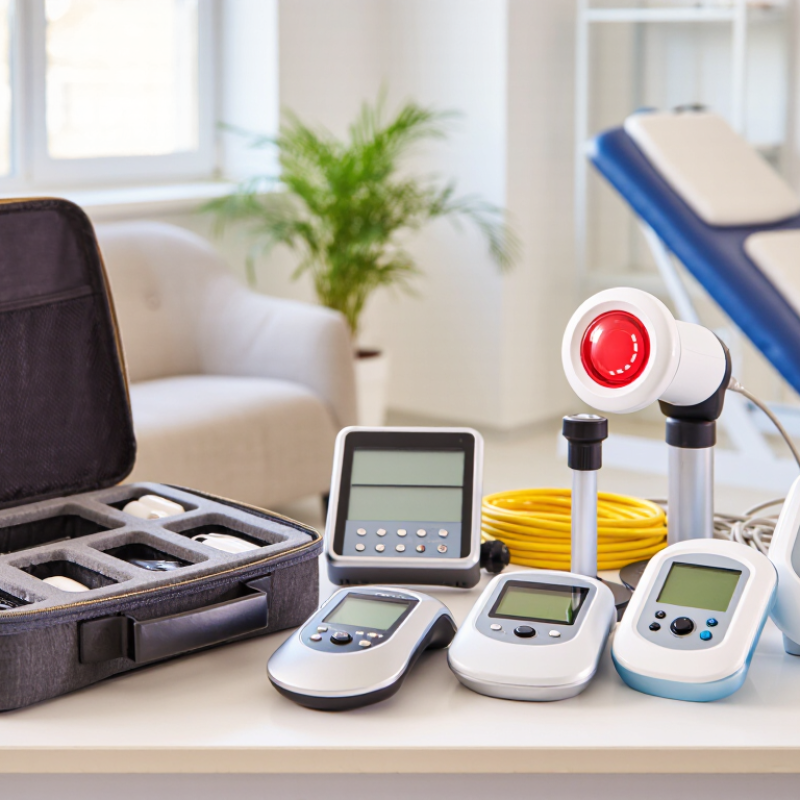
The World Health Organization estimates that 2.4 billion people worldwide may benefit from rehabilitation services. This demand is increasing as populations age and chronic conditions become more common. Portable Physiotherapy equipment supports treatment beyond hospitals, including clinics, home-care settings, and sports facilities. Small electrotherapy units, ultrasound devices, infrared lamps, and compact muscle stimulators can fit inside a practical mobile case. That convenience matters.
Market reports also show sustained growth. Grand View Research identifies rising demand for physical therapy equipment, supported by aging populations, post-operative care, and outpatient treatment. Fortune Business Insights reports similar expansion across rehabilitation technology markets. However, market growth does not automatically prove supplier reliability. A polished catalogue is not proof. That deserves attention.
This guide examines China’s leading portable physiotherapy equipment suppliers through an E-E-A-T-focused lens. It considers manufacturing experience, product documentation, clinical support, quality systems, export performance, and after-sales responsiveness. ISO 13485 certification, applicable NMPA registration, CE compliance, electrical safety testing, and electromagnetic compatibility records should be verified for each product. Buyers should also inspect battery performance, treatment presets, user training, warranty terms, and spare-part availability. Independent clinical evidence remains valuable, especially for devices used with vulnerable patients. No supplier fits every market. That is a limitation. A dependable choice depends on intended use, regulatory requirements, budget, and service expectations.
Portable physiotherapy equipment includes compact devices used during rehabilitation outside traditional treatment rooms. Examples include resistance bands, folding exercise pedals, handheld stimulation units, balance pads, and compact heat or cold therapy tools. These items support movement, pain management, muscle activation, and recovery routines. Their small size helps patients exercise at home, in community clinics, or during supervised travel.
The label can be misleading. Portable does not mean suitable for everyone. A stimulation device may require careful electrode placement, while heat therapy can irritate sensitive skin. Physiotherapists should assess the patient’s condition, treatment goals, and medical history before recommending equipment. Reliable suppliers should provide clear instructions, safety information, maintenance guidance, and evidence-based use cases. Devices should also be easy to clean, store, and inspect between sessions. In practice, convenience sometimes receives too much attention. Clinical suitability matters more.
Tips: Choose equipment with adjustable settings and readable controls. Check cables, pads, hinges, and battery compartments regularly. Keep a simple treatment record, including duration, discomfort, and results. Stop using the device if unusual pain, dizziness, skin changes, or swelling appears. Ask a qualified physiotherapist to review the routine, especially after surgery or injury.
China’s portable physiotherapy equipment suppliers commonly provide electrotherapy, therapeutic ultrasound, infrared heating, and pneumatic compression systems. Each category supports a different clinical purpose. TENS may help manage selected pain conditions through controlled electrical stimulation. NMES can support muscle activation during rehabilitation. However, results vary between patients.
Portable ultrasound devices deliver sound energy to targeted soft tissues. Clinicians may use them alongside exercise therapy for selected tendon, muscle, or joint complaints. Infrared and reusable hot-cold systems offer practical temperature-based care. They can assist comfort, circulation management, and recovery after physical activity. Compression devices are often used for swelling control and venous support, when clinically appropriate.
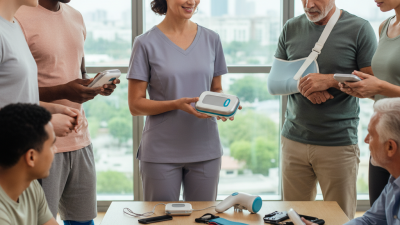
Clinical application should guide purchasing decisions. A rehabilitation clinic may need adjustable intensity, clear controls, and washable contact surfaces. Home-care programs require lighter units, simple instructions, and dependable battery performance. Suppliers should provide technical files, user training, maintenance guidance, and traceable quality records. Independent testing matters.
Not every portable device suits every patient. Contraindications, skin condition, sensation, implanted devices, and medication use require careful review. A compact design is useful, but it cannot replace clinical judgment. Some suppliers emphasize features more than evidence. Buyers should examine output accuracy, service response, and real treatment experience before choosing equipment.
China Top Portable Physiotherapy Equipment Suppliers?
How to Evaluate Chinese Physiotherapy Equipment Suppliers
A reliable supplier should explain how each device is designed, tested, and maintained. Ask for product specifications, operating limits, treatment modes, and battery performance. Do not rely on attractive product photos alone. Request clear images of control panels, connectors, labels, and internal safety features. A portable unit should feel balanced in one hand and remain stable during repeated use.
Check the supplier’s manufacturing experience and quality procedures. Ask whether incoming components, circuit boards, and finished devices receive documented inspections. Request test records from recent production batches, not only general certificates. Confirm that manuals include warnings, cleaning instructions, maintenance schedules, and storage conditions. Independent laboratory reports can provide stronger evidence than sales claims. Samples should be tested by qualified users in realistic clinical settings.
My own early mistake was judging suppliers by response speed. Fast replies did not always mean careful engineering. A better review includes a factory video call, sample evaluation, and written answers from technical staff. Examine packaging, serial-number tracking, replacement-part availability, and training support. Ask how complaints are recorded and corrected. Some suppliers may avoid difficult questions. That matters. A small inconsistency in a specification sheet may reveal weak document control, although it might also be a simple translation error. Keep records, compare details, and allow time for independent verification before placing a large order.
This practical evaluation framework gives the highest weight to regulatory compliance and quality management. Buyers should verify ISO 13485 certification, risk-management documentation aligned with ISO 14971, applicable IEC 60601 safety evidence, product traceability, technical files, warranty terms, service capability, and export documentation before selecting a supplier. The percentages are recommended assessment weights, not market-share data.
China’s portable physiotherapy equipment supply chain is concentrated in several strong manufacturing regions. The China Medical Device Industry Association reported that China’s medical device market exceeded RMB 1 trillion in 2023. This scale supports specialized factories, testing laboratories, and component networks.
Guangdong remains important for compact electronic therapy devices. Shenzhen and Dongguan offer PCB assembly, battery integration, plastic molding, and rapid prototype production. These capabilities suit lightweight stimulators, heat therapy units, and handheld recovery devices. Jiangsu has stronger medical manufacturing depth. Suzhou and Nanjing suppliers often provide cleaner assembly, precision machining, and documentation support. Zhejiang adds practical strengths in molds, enclosures, cables, and cost-controlled mass production.
The numbers need careful reading. Grand View Research estimated the global physical therapy equipment market at about USD 21 billion in 2023, with steady growth expected through 2030. That report covers more than portable equipment, so it should not be used as a direct portable-market forecast. China Customs data for HS 9019 also indicate strong export activity in massage and mechanotherapy equipment, but this category combines several product types. Verification matters.
A serious buyer should inspect factory test records, battery safety files, calibration methods, and sample consistency. Ask for three production samples, not one polished unit. Small suppliers may offer impressive customization but weaker process control. Larger regional manufacturers may provide better traceability, although their minimum order quantities can be less flexible. That trade-off is easy to underestimate.
China’s portable physiotherapy equipment suppliers should be evaluated beyond price and product appearance. Quality begins with a documented quality system, ideally aligned with ISO 13485. Electrical devices should also show relevant IEC 60601-1 safety testing. For European sales, verify valid CE documentation and the correct conformity route. FDA registration is not the same as FDA approval. Check the difference carefully. Certificates must match the exact model, manufacturer, and production site.
During supplier evaluation, request a sample unit and inspect its casing, cables, controls, and treatment output. Ask for calibration records, risk assessments, test reports, and batch traceability. A reliable supplier should explain cleaning procedures, expected service life, warranty limits, and replacement-part availability. Confirm whether manuals include contraindications and operating instructions. I once treated a certificate as a final answer. That was too simplistic. Documents can be genuine yet unsuitable for your target market or model.
Tips: Compare at least three suppliers using the same checklist. Confirm serial numbers on certificates. Test the device under realistic clinic conditions, not only during a video call. Ask how quickly technical support responds. Clarify shipping damage procedures and staff training. Leave room for doubt; a low quotation may hide weak testing, limited maintenance, or inconsistent production.
| Evaluation Dimension | What to Check with a Supplier | Relevant Standard, Certification, or Evidence | Why It Matters in Purchasing |
|---|---|---|---|
| Quality Management System | Confirm that the manufacturing site operates documented procedures for design control, production, inspection, complaints, corrective actions, and traceability. | ISO 13485:2016 certificate issued for the relevant legal manufacturer and manufacturing scope. | Provides evidence that medical-device quality processes are controlled and repeatable. |
| Risk Management | Request a summary of hazards, risk controls, residual risks, and post-market monitoring for the exact device model. | ISO 14971:2019 risk-management process for medical devices. | Helps identify hazards such as burns, electrical shock, excessive stimulation, incorrect dosage, or misuse. |
| Electrical Safety | Verify leakage-current testing, insulation, grounding or double insulation, temperature limits, output controls, and protective shutdown functions. | IEC 60601-1, Medical electrical equipment—General requirements for basic safety and essential performance. | Important for rechargeable or mains-powered electrotherapy, ultrasound, heat, and light-based equipment. |
| Electromagnetic Compatibility | Ask for immunity and emissions test reports for the final commercial configuration, including chargers and accessories. | IEC 60601-1-2 for electromagnetic compatibility of medical electrical equipment. | Reduces the risk of interference with other medical devices and nearby electronic equipment. |
| Usability and Human Factors | Review warnings, controls, display readability, treatment settings, user instructions, and foreseeable-use testing. | IEC 62366-1 usability engineering for medical devices. | Clear controls and instructions can reduce operator errors during clinical or home use. |
| Software and Connectivity | For app-connected or digitally controlled devices, check software version control, cybersecurity measures, update policy, access control, and data handling. | IEC 62304 for medical-device software life-cycle processes; cybersecurity documentation where applicable. | Supports safe software changes and protects treatment records or connected-device functions. |
| Product-Specific Performance | Compare measured output, accuracy, repeatability, treatment time, intensity range, temperature, frequency, or energy parameters with the product specification. | Calibration records, verification reports, validation reports, and final inspection records for the exact model. | Prevents purchasing decisions based only on marketing descriptions or maximum output claims. |
| Portable Design and Durability | Evaluate weight, dimensions, enclosure strength, connector durability, drop or transport testing, carrying case quality, and protection against dust or moisture where claimed. | Declared IP rating should be supported by appropriate ingress-protection testing; transport testing should match the intended shipping method. | Portable equipment is more exposed to movement, repeated handling, and variable operating environments. |
| Battery and Charger Safety | Check battery chemistry, capacity, cycle expectations, charging time, protection circuitry, replacement procedure, and charger compatibility. | IEC 62133-2 for portable sealed secondary cells and batteries; UN 38.3 transport testing for lithium batteries. | Supports safer operation and smoother international shipment of battery-powered units. |
| Regulatory Market Access | Identify the intended market, device classification, legal manufacturer, authorized representative requirements, registration duties, and applicable conformity route. | EU Medical Device Regulation (EU) 2017/745 where applicable; United States FDA requirements where applicable; other national rules may differ. | A certificate alone does not guarantee that the product is legally marketable in every country. |
| Technical Documentation | Request the user manual, technical specifications, labeling artwork, declaration of conformity where applicable, test reports, maintenance instructions, and spare-parts list. | Documentation should identify the exact model, revision, manufacturer, intended use, limitations, and applicable standards. | Complete documentation simplifies regulatory review, training, service, and customs clearance. |
| Biocompatibility and Patient-Contact Materials | Determine whether electrodes, probes, straps, pads, gels, or other accessories contact intact skin or damaged skin, and request material and cleaning information. | ISO 10993 series may apply according to the nature and duration of patient contact. | Helps manage risks of irritation, sensitization, contamination, and unsuitable reuse. |
| Cleaning and Infection Control | Check approved cleaning agents, disinfection method, contact time, reusable-accessory limits, and whether accessories are single-use or reusable. | Validated cleaning and disinfection instructions should be supplied for the actual materials and accessories. | Reduces cross-contamination risk and prevents damage caused by unsuitable chemicals. |
| Environmental Compliance | Ask whether the product, packaging, cables, batteries, and electronics meet destination-market substance restrictions and waste requirements. | RoHS and REACH requirements may apply depending on the destination market and product configuration. | Supports import compliance and reduces environmental and disposal risks. |
| Supplier Audit and Traceability | Verify factory location, subcontractors, incoming inspection, batch or serial-number control, change notification, and complaint handling. | On-site audit, remote audit, quality agreement, production records, and traceability samples. | Improves accountability and helps isolate affected units if a quality issue occurs. |
| Sampling and Pre-Shipment Inspection | Approve a reference sample, define acceptance criteria, inspect packaging and accessories, and test a statistically appropriate sample before shipment. | Purchase specification, approved sample, inspection checklist, and agreed acceptance-quality limits. | Reduces the risk of receiving units that differ from the evaluated sample. |
| Warranty and After-Sales Service | Clarify warranty duration, exclusions, repair or replacement procedure, response time, technical support, firmware support, and availability of consumables. | Written warranty, service-level agreement, spare-parts schedule, and escalation process. | Total ownership cost depends on service availability, not only the initial purchase price. |
| Training and Clinical Support | Confirm whether the supplier provides user training, contraindication guidance, treatment protocols, service manuals, and onboarding materials. | Training records, competency checklist, user manual, and approved clinical-use instructions. | Proper training helps prevent misuse and supports consistent treatment delivery. |
| Commercial and Logistics Terms | Compare minimum order quantity, lead time, payment terms, packaging, Incoterms, shipping documents, spare-unit policy, and customization charges. | Formal quotation, pro forma invoice, agreed technical specification, packing list, and shipment documentation. | Clear terms reduce delays, unexpected costs, and disputes over product configuration. |