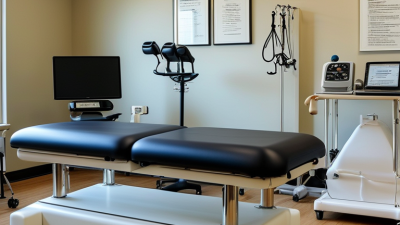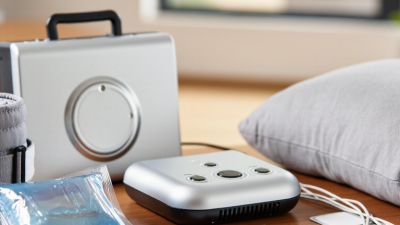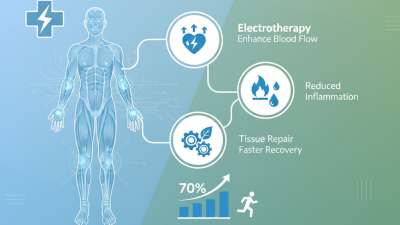
Choosing the 2026 Best Electrotherapy Machine requires more than comparing prices, channels, or attractive product images. Global buyers need equipment that performs consistently in real clinical settings. A treatment room may contain a compact TENS unit, reusable electrodes, printed protocols, and a busy therapist managing several patients. Small details matter. Stable output matters. Clear controls matter even more.
Professor Tim Watson, a leading electrotherapy educator, has repeatedly emphasized this practical principle: “Electrotherapy should support clinical reasoning, not replace it.” That idea should guide every purchasing decision. The best Electrotherapy Machine is not automatically the newest model. It should match the intended application, user training, patient population, and local compliance requirements. Buyers should examine waveform options, intensity control, timer accuracy, electrode compatibility, documentation, warranty coverage, and technical support.
Safety cannot be treated as a marketing phrase. Importers and distributors must verify electrical protection, labeling, instructions, and relevant certification before placing equipment into a new market. Requirements differ across regions. Confirm them carefully.
Real-world testing is valuable.
A machine may look excellent online but feel confusing during treatment. Buttons can be too sensitive. Cables can wear quickly. User manuals may be poorly translated. These weaknesses deserve honest attention. Evidence for some applications also remains mixed, so no device should promise universal results. This guide compares leading 2026 options through performance, usability, safety, serviceability, and value. It is designed to help clinics, distributors, rehabilitation centers, and informed buyers make a more defensible choice.
2026 Best Electrotherapy Machine for Global Buyers
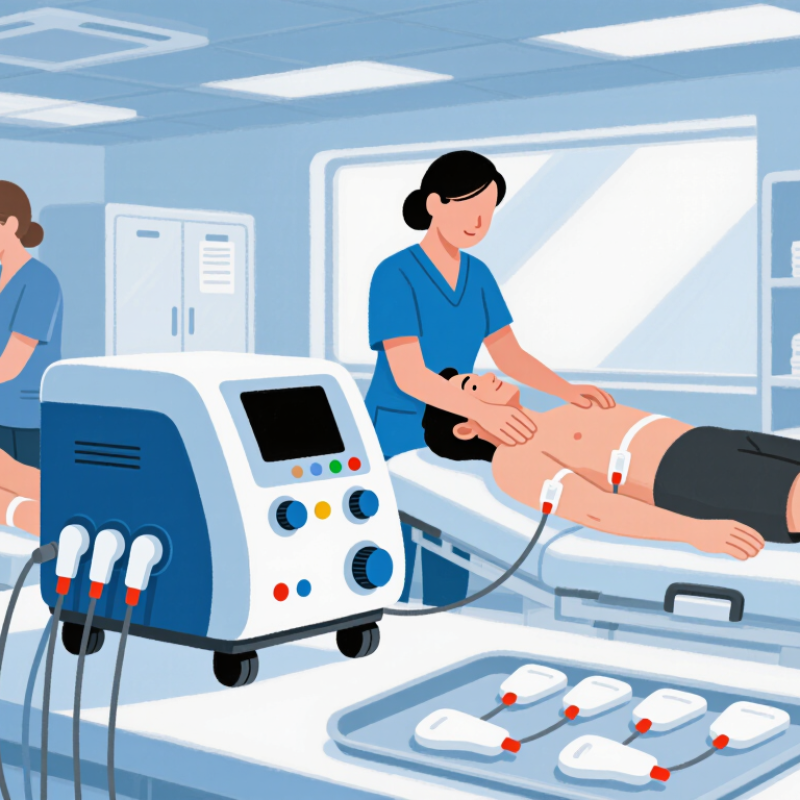
Electrotherapy machines deliver controlled electrical or physical energy through pads, probes, or applicators. Clinicians use them to support pain management, muscle activation, circulation, and rehabilitation. Their value depends on correct assessment, not impressive specifications. A suitable device should offer clear controls, stable output, washable accessories, and safety documentation for its target market.
TENS applies mild electrical pulses to influence pain signals through surface electrodes. EMS or NMES stimulates muscles during weakness, deconditioning, or movement retraining. Interferential therapy uses crossing currents and may help manage deeper discomfort. Microcurrent provides very low-level stimulation, although clinical expectations should remain modest. Therapeutic ultrasound uses sound waves rather than electrical current and is often grouped with electrotherapy equipment. It requires careful adjustment of intensity, frequency, and treatment time.
Patient comfort matters. Electrodes should contact clean, intact skin without excessive pressure. A therapist must check sensation, circulation, implanted electronic devices, pregnancy-related considerations, and other contraindications before treatment. Never place electrodes across the chest or on damaged skin without qualified guidance. I have noticed that buyers sometimes focus too heavily on the number of programs. That can be misleading. A smaller program library with accurate output may be safer and easier to train staff on. Device selection also deserves review after real-world use, because a machine that looks excellent in a brochure may feel awkward beside a treatment table.
2026 Best Electrotherapy Machine for Global Buyers
Before buying an electrotherapy machine, define the clinical purpose. TENS, NMES, and microcurrent programs require different waveforms and controls. Adjustable frequency, pulse width, intensity, and ramp time support more precise treatment. Clear labels matter. So does output accuracy.
The World Health Organization estimates that 2.4 billion people could benefit from rehabilitation worldwide (WHO, Rehabilitation 2030, 2023). The Global Burden of Disease Study 2021 also reported about 1.71 billion people living with musculoskeletal conditions (The Lancet, 2023). These figures suggest broad demand, but they do not prove that every electrotherapy device is suitable. A higher channel count may look impressive. It can also complicate training and maintenance.
Check electrical safety against IEC 60601-1 and electromagnetic compatibility requirements. Review leakage current, emergency stop access, electrode detection, and temperature control. For global purchasing, verify voltage range, plug options, language support, service response, and local device registration. Request calibration records and clinical user instructions. A touchscreen is useful, but poor menu design slows treatment. Battery life needs testing under real workloads, not only laboratory claims. No specification sheet replaces clinical judgment. That remains an uncomfortable limitation.
| Evaluation Dimension | Recommended Benchmark for 2026 | Why It Matters | What Global Buyers Should Check | Buyer Priority |
|---|---|---|---|---|
| Treatment Modalities | At least one clinically established modality; combination units may include TENS, EMS/NMES, IFC, and therapeutic ultrasound. | Different modalities use different electrical or acoustic parameters and are intended for different treatment objectives. | Confirm whether the unit is designed for pain relief, muscle stimulation, rehabilitation, circulation support, or multiple applications. | Essential |
| TENS Output | Adjustable pulse frequency commonly covering approximately 1–150 Hz, with pulse width commonly adjustable from about 50–400 μs. | Frequency and pulse width influence stimulation sensation and treatment flexibility. | Check whether amplitude, frequency, pulse width, ramp time, and treatment duration can be adjusted independently. | Essential |
| EMS/NMES Output | Adjustable stimulation with frequency, pulse width, intensity, contraction time, relaxation time, and ramp controls. | Timed contraction and rest cycles help support controlled muscle-training protocols. | Look for separate intensity controls, symmetrical or independent channels, and clearly defined ramp-up and ramp-down settings. | Essential |
| Interferential Current | If included, verify carrier-frequency and amplitude-modulation settings, plus four-electrode or compatible treatment configurations. | IFC equipment requires appropriate channel configuration and electrode placement for the selected program. | Confirm the number of channels, independent intensity control, vector or sweep functions, and electrode compatibility. | Application-dependent |
| Therapeutic Ultrasound | Common operating frequencies are 1 MHz and 3 MHz; intensity and continuous or pulsed duty cycle should be adjustable. | Frequency affects penetration characteristics, while intensity and duty cycle affect delivered energy. | Check effective radiating area, output calibration information, treatment timer, coupling requirements, and applicator size. | Application-dependent |
| Number of Channels | Two independent channels are suitable for many home and basic clinical applications; four channels are useful for multi-site treatment. | More independent channels can improve workflow efficiency but may increase setup complexity and cost. | Verify whether each channel has independent intensity and program controls rather than only shared output. | Important |
| Intensity Control | Fine, gradual adjustment with a clearly displayed output level and a reliable zero-start safety position. | Gradual intensity changes improve comfort and help reduce accidental overstimulation. | Test the control response, display readability, automatic output reset, and whether intensity can be adjusted during treatment. | Essential |
| Preset and Custom Programs | Preset protocols plus manual adjustment of frequency, pulse width, intensity, ramp, duty cycle, and treatment time where applicable. | Presets simplify operation, while custom settings support professional treatment planning. | Check whether programs can be locked, saved, exported, or restricted by user level. | Important |
| Safety Features | Output lock, emergency stop or pause, lead-disconnection detection, over-current protection, and clear contraindication guidance. | Safety controls help minimize misuse, unexpected stimulation, and equipment-related hazards. | Request the safety test procedure, alarm behavior, user manual, maintenance instructions, and risk-management documentation. | Essential |
| Electrical Safety and Compliance | Evidence of compliance with applicable medical-device, electrical-safety, electromagnetic-compatibility, and quality-management requirements in the target market. | Regulatory acceptance and electrical safety requirements vary by destination and intended use. | Verify valid certificates, declarations, test reports, device classification, labeling, importer obligations, and country-specific registration. | Essential |
| Electrodes and Accessories | Reusable or single-use electrodes with documented dimensions, connector type, replacement guidance, and compatible cables. | Electrode condition, size, placement, and skin contact influence current delivery and user comfort. | Confirm included quantities, replacement availability, shelf life, cleaning instructions, cable durability, and recurring consumable cost. | Important |
| User Interface | Clear screen, intuitive navigation, multilingual instructions, visible channel status, and treatment countdown. | A straightforward interface reduces setup errors across different user groups and languages. | Check menu language options, icon clarity, tactile controls, screen visibility, accessibility, and operator training requirements. | Important |
| Power Supply | Universal input around 100–240 V AC, 50/60 Hz, or a certified region-specific power supply. | Compatible input power supports international deployment and reduces adapter-related risks. | Confirm plug type, detachable cable requirements, fuse rating, battery charging requirements, and local electrical approvals. | Essential |
| Portability and Housing | Compact housing, secure cable storage, durable medical-grade enclosure, and optional battery operation for mobile use. | Portability is valuable for home visits, sports settings, clinics with limited space, and field services. | Review dimensions, weight, ingress-cleaning guidance, drop resistance claims, handle design, and battery runtime if applicable. | Important |
| Calibration and Maintenance | Documented preventive-maintenance schedule, traceable output verification, service procedures, and replaceable accessories. | Regular verification helps maintain consistent treatment output over the equipment’s service life. | Ask about recommended calibration intervals, service-center availability, spare parts, software updates, and technical support. | Essential |
| Documentation and Training | User manual, quick-start guide, treatment protocols, contraindications, cleaning instructions, and technical documentation. | Complete documentation supports safe operation, staff onboarding, and regulatory audits. | Confirm availability in the required languages and verify that instructions distinguish professional use from home use. | Important |
| Warranty and Total Cost of Ownership | Written warranty terms, defined exclusions, service response times, and transparent costs for electrodes, cables, applicators, batteries, and calibration. | The purchase price alone does not represent the long-term operating cost. | Compare landed cost, import duties, consumables, repair logistics, spare-part availability, and expected service life. | Important |
Note: Technical ranges shown above are commonly encountered design benchmarks rather than universal requirements. Final selection should be based on the intended clinical use, qualified professional guidance, and the regulatory requirements of the destination market.
2026 Best Electrotherapy Machine for Global Buyers
Safety compliance should guide every international electrotherapy purchase. A reliable machine normally requires electrical safety testing under IEC 60601-1. Electromagnetic compatibility testing under IEC 60601-1-2 is also essential. Without it, nearby monitors or communication devices may experience interference. That risk is easy to underestimate.
Look for evidence of ISO 13485-based manufacturing controls and documented risk management under ISO 14971. For electrotherapy equipment, IEC 60601-2-10 may also apply, depending on the device’s function and output. Ask for test reports, declarations, technical files, and calibration records. Do not rely on a logo printed on a brochure. Documents matter more.
Market access requirements differ. European sales may require conformity with the Medical Device Regulation, while the United Kingdom uses its own framework. The United States may require clearance or registration, depending on classification and intended use. Other markets can request local representatives, language-specific labels, or additional electrical testing. Check the exact destination country. Small details matter.
A practical inspection should include cables, electrode connectors, emergency controls, and treatment timers. Test the displayed intensity against the delivered output. Keep records. In real purchasing work, paperwork is sometimes complete while user instructions remain unclear. That weakness deserves attention. A well-designed interface should show treatment time, waveform, intensity, and warnings from a normal operating distance. Training materials should explain contraindications, cleaning, storage, and maintenance without vague wording. Safety is not only a certificate.
Global buyers need more than a low purchase price when comparing electrotherapy machines.
The WHO estimates that 2.4 billion people may need rehabilitation services worldwide. That demand makes reliability, training, and service access practical purchasing criteria.
A compact two-channel unit suits small clinics, while multi-channel systems support busy rehabilitation departments. However, more channels do not automatically mean better treatment.
Compare waveform control, adjustable intensity, pulse width, preset programs, and electrode compatibility.
Devices tested against IEC 60601-1 offer a stronger electrical-safety foundation. Buyers should also check isolation, emergency stop functions, user manuals, and local technical support.
In real clinics, a clear screen matters when gloves are wet and treatment rooms are crowded. It sounds minor. It is not.
Clinical evidence remains uneven. A Cochrane review of transcutaneous electrical nerve stimulation reported uncertain benefits for several chronic-pain conditions, partly because studies used different settings and small samples.
Therefore, a machine should not be selected by advertised programs alone. Ask for independent test reports, calibration records, warranty terms, and post-sale training.
WHO rehabilitation guidance also stresses person-centred care, so operators must match stimulation parameters to patient assessment.
I would be cautious about impressive claims. The cheapest option may create higher costs through downtime, replacement electrodes, or poor staff confidence.
No universal winner exists.
2026 Best Electrotherapy Machine for Global Buyers
Selecting an electrotherapy machine should begin with patient needs, not online popularity. The World Health Organization reports that 2.4 billion people may benefit from rehabilitation services worldwide. This demand makes careful device selection essential. Define the intended use: pain relief, muscle activation, circulation support, or post-injury recovery. Check adjustable intensity, waveform options, electrode compatibility, treatment timers, and clear user controls. A device suitable for a clinic may be excessive for home use. More features are not always better.
Purchase decisions should include evidence, safety, and service access. Confirm compliance with IEC 60601-1 electrical safety requirements and ISO 14971 risk-management principles. Also verify registration rules in the destination market. Ask for clinical documentation, operator training, warranty terms, and spare-part availability. The WHO’s Global Status Report on Physical Activity 2022 found that 31% of adults worldwide were insufficiently active. That figure supports rehabilitation demand, but it does not prove every user needs electrotherapy. I still see buyers treating market size as clinical evidence. That is a costly mistake.
Maintenance needs a written routine. Inspect cables and electrode leads before each session. Clean reusable surfaces according to the manufacturer’s instructions. Replace worn pads when adhesion or skin contact changes. Record treatment faults, cleaning dates, and calibration checks. Staff should receive refresher training after long storage or software updates. Battery failure is easy to overlook. Test it regularly. A qualified technician should handle internal repairs, electrical testing, and performance verification. Forecasting service costs may feel inconvenient, yet neglected maintenance can interrupt treatment and weaken patient trust.
How to Select, Purchase, and Maintain the Right Device in 2026
The chart compares representative stimulation frequencies commonly used in clinical protocols. TENS is typically selected for sensory-level pain relief, while NMES and FES commonly use motor-level stimulation to support muscle activation and functional movement. IFC devices use a medium-frequency carrier with a low-frequency beat effect.
These values are typical reference settings rather than universal specifications. Before purchasing, global buyers should verify waveform options, adjustable frequency and pulse width, electrical safety certification, accessories, local registration requirements, warranty coverage, and service availability. Inspect the device before each use, clean reusable electrodes and leads according to the instructions, and arrange periodic electrical-safety checks according to the manufacturer’s maintenance schedule and local regulations.