Leave Your Message
China’s therapy equipment industry is entering a more demanding phase. Aging populations, chronic pain, post-stroke recovery, and sports injuries are increasing rehabilitation needs. The World Health Organization estimates that 2.4 billion people worldwide could benefit from rehabilitation services. That figure gives this market practical urgency.
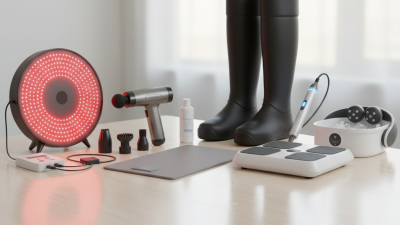
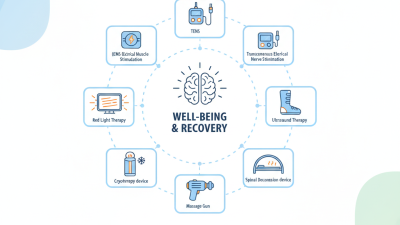
This article examines China’s Top 10 Therapy Machine Manufacturers in 2026. “Therapy Machine” covers several categories, including physiotherapy units, electrotherapy systems, ultrasound devices, shockwave equipment, traction machines, and rehabilitation robots. The boundaries are not always consistent. Market reports often classify these products differently. Grand View Research and Fortune Business Insights both describe steady expansion in physical therapy equipment, although their market values and forecasts vary by definition. That difference deserves attention.
China adds a strong domestic foundation. According to China’s National Bureau of Statistics, people aged 60 and above exceeded 300 million in 2024. Hospitals, rehabilitation centers, elderly-care facilities, and home users are seeking safer, easier-to-operate equipment. Manufacturers are responding with touchscreen controls, preset protocols, compact designs, and connected monitoring functions.
However, factory scale alone does not prove clinical value. A credible comparison must examine NMPA registration, ISO 13485 quality systems, clinical evidence, after-sales training, warranty coverage, and export experience. Product specifications can look impressive on paper. Real performance may differ.
This list is therefore a researched starting point, not an absolute verdict. It considers manufacturing capability, product breadth, compliance, reliability, and professional feedback. Buyers should still verify certificates, testing records, and service arrangements before purchasing. The best choice depends on treatment goals, patient safety, budget, and clinical workflow.
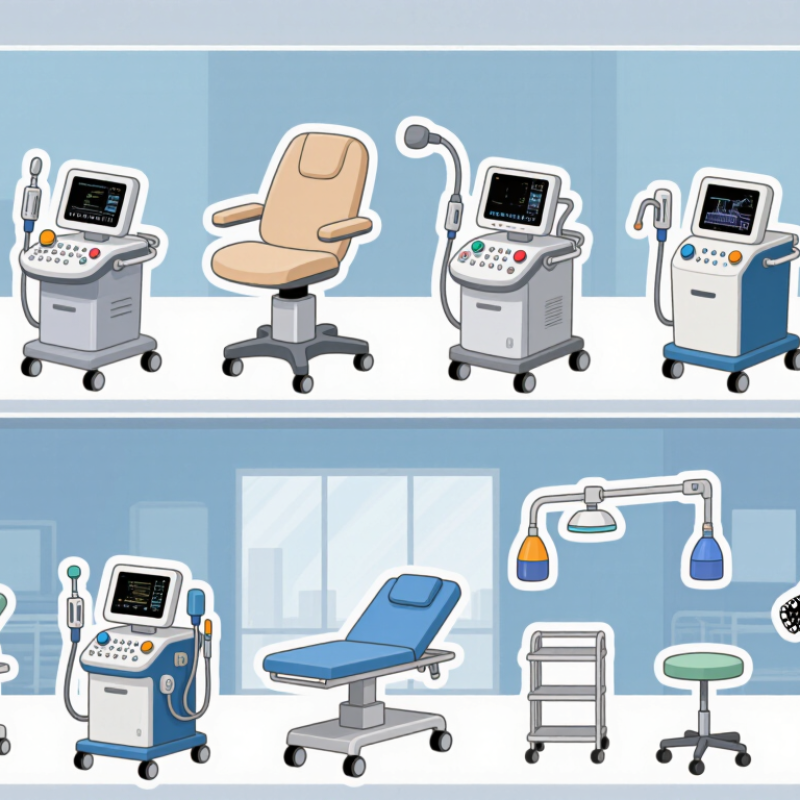
Therapy machine manufacturing in China covers the design, production, testing, and support of equipment used to assist rehabilitation or clinical treatment. The scope may include electrotherapy units, therapeutic ultrasound systems, heat therapy equipment, traction devices, and rehabilitation machines. It can also include combined systems with sensors, control software, patient interfaces, and treatment accessories.
The boundary is not always neat. A home-use heat device may follow a different regulatory path from a hospital rehabilitation system. Therefore, manufacturers must define intended use, user environment, treatment parameters, and risk level before production begins. Experienced factories usually connect engineering teams with clinical advisers, quality specialists, and testing laboratories. Their work may involve component inspection, electrical safety testing, software verification, calibration, packaging, and batch traceability.
Reliable manufacturing requires more than attractive equipment. It demands documented processes, controlled suppliers, trained operators, and evidence that each machine performs consistently. Quality systems aligned with ISO 13485 and risk management principles can support this process, alongside applicable Chinese medical device requirements. Yet compliance documents do not guarantee practical value. A display may be clear, while a foot pedal feels awkward. A prototype may pass testing but confuse an elderly user. These details deserve careful observation. China’s manufacturing scope therefore includes not only factory assembly, but also usability improvement, technical service, maintenance planning, and responsible product development.
| No. | Manufacturing Segment | Core Therapy Modality | Typical Machine Forms | Primary Clinical or Rehabilitation Applications | Typical China Regulatory Considerations | Key Manufacturing Scope |
|---|---|---|---|---|---|---|
| 1 | Electrotherapy Equipment | Electrical stimulation, transcutaneous electrical nerve stimulation, neuromuscular stimulation and interferential current | Portable stimulators, multi-channel therapy units and trolley-mounted systems | Pain management, muscle activation, rehabilitation after injury and physical therapy | Medical-device classification depends on intended use, output parameters and risk level; products require applicable NMPA filing or registration | Pulse-generation circuits, insulated patient leads, electrode accessories, output control, isolation protection and software interfaces |
| 2 | Ultrasound Therapy Equipment | Therapeutic acoustic energy delivered through a treatment head | Handheld ultrasound units, dual-frequency systems and integrated physiotherapy consoles | Soft-tissue rehabilitation, musculoskeletal therapy and physiotherapy procedures | Electrical safety, acoustic output, applicator performance, biocompatibility of patient-contact parts and NMPA compliance are relevant | Piezoelectric transducers, acoustic coupling systems, treatment-head temperature control, timers and output calibration |
| 3 | Shortwave and Microwave Diathermy Systems | Controlled radiofrequency electromagnetic energy for deep-heating therapy | Shortwave therapy cabinets, capacitive or inductive applicator systems and dedicated treatment consoles | Physical therapy, tissue warming and selected musculoskeletal rehabilitation applications | Electromagnetic exposure control, shielding, leakage limits, electromagnetic compatibility and intended-use documentation are essential | RF power modules, applicators, shielding structures, impedance control, cooling systems and interlock protection |
| 4 | Phototherapy and Therapeutic Light Equipment | Non-ionizing optical energy, including visible, infrared and selected ultraviolet wavelengths | LED panels, flexible light pads, handheld lamps and enclosed treatment units | Dermatology, wound-care support, pain relief and rehabilitation-related light therapy | Wavelength accuracy, optical output, exposure-time control, eye and skin safety, labeling and intended-use claims must be controlled | LED or lamp modules, optical filters, heat dissipation, dose monitoring, timers and protective housings |
| 5 | Laser Therapy Equipment | Low-level or therapeutic laser energy for localized treatment applications | Handheld laser probes, fiber-delivery systems and console-based therapeutic lasers | Selected pain-management, rehabilitation, dental and dermatological applications | Laser safety classification, access control, emission limits, protective eyewear, electrical safety and NMPA registration requirements apply | Laser diodes, optical delivery assemblies, power monitoring, beam control, safety interlocks and treatment software |
| 6 | Magnetic Therapy Equipment | Static or pulsed magnetic fields generated by permanent magnets or electromagnetic coils | Magnetic-field therapy mats, coil applicators, localized treatment devices and rehabilitation consoles | Physical therapy, rehabilitation support and localized treatment programs where clinically indicated | Field-strength verification, electromagnetic compatibility, implant-related warnings, electrical safety and evidence supporting intended use are important | Coil assemblies, magnetic-field controllers, power supplies, field sensors, applicators and patient-safety systems |
| 7 | Traction and Spinal Decompression Systems | Controlled mechanical traction applied to the cervical or lumbar region | Motorized traction tables, cervical traction units and integrated rehabilitation beds | Spinal rehabilitation, posture-related therapy and selected musculoskeletal conditions | Mechanical safety, load limits, emergency release, patient positioning, software control and risk management are central requirements | Electric actuators, load cells, adjustable frames, restraint systems, control panels and emergency-stop mechanisms |
| 8 | Compression and Pressotherapy Equipment | Sequential pneumatic compression or controlled pressure therapy | Multi-chamber compression systems, sleeve-based devices and integrated air-pump consoles | Edema management, circulation-support programs, postoperative rehabilitation and sports recovery | Pressure accuracy, hose integrity, alarm functions, patient-contact materials and contraindication labeling must be evaluated | Air compressors, valves, pressure sensors, programmable chambers, garments and leakage-control systems |
| 9 | Hydrotherapy and Thermal Therapy Equipment | Therapeutic use of water, heat or controlled temperature gradients | Hydrotherapy tanks, whirlpool systems, paraffin units, heating cabinets and temperature-controlled therapy beds | Rehabilitation, mobility training, thermal comfort therapy and selected physical therapy procedures | Temperature accuracy, water sanitation, electrical protection, anti-scald measures, drainage and infection-control procedures are required | Heating elements, pumps, temperature sensors, insulated tanks, water-treatment components and safety cut-offs |
| 10 | Multifunction Rehabilitation Therapy Systems | Combination of electrotherapy, ultrasound, heat, light or exercise-related treatment functions | Modular rehabilitation stations, multifunction consoles and digitally controlled therapy platforms | Hospital rehabilitation departments, outpatient physiotherapy, sports medicine and home-care programs | Each therapeutic function may have separate technical, clinical and registration requirements; software, cybersecurity and combination-device risk assessment are also relevant | Modular hardware, shared user interfaces, treatment presets, data records, device connectivity, calibration and serviceability |