China’s Medical Equipment sector has grown from a cost-focused manufacturing base into a diverse supplier network. Its factories produce imaging systems, patient monitors, diagnostic kits, and surgical instruments. Yet scale alone does not establish quality. Buyers also need to examine clinical evidence, manufacturing controls, service coverage, and the availability of replacement parts.
As WHO Director-General Dr. Margaret Chan has stated, “Medical devices are essential for safe and effective prevention, diagnosis, treatment and rehabilitation of illness and disease.” That principle offers a useful way to assess leading Chinese manufacturers: their products must work reliably in real clinical settings, not only in a factory demonstration. A clear service plan matters. So does transparent product documentation.
This overview explores notable Chinese manufacturers and the strengths associated with their portfolios. It considers areas such as imaging, monitoring, laboratory diagnostics, and home-care technology. Company rankings can shift as products, evidence, and market needs change, so no single list should be treated as final. A polished brochure is not proof. Readers should verify certifications and performance claims for each specific product and market. That takes time. It is easy to overlook.
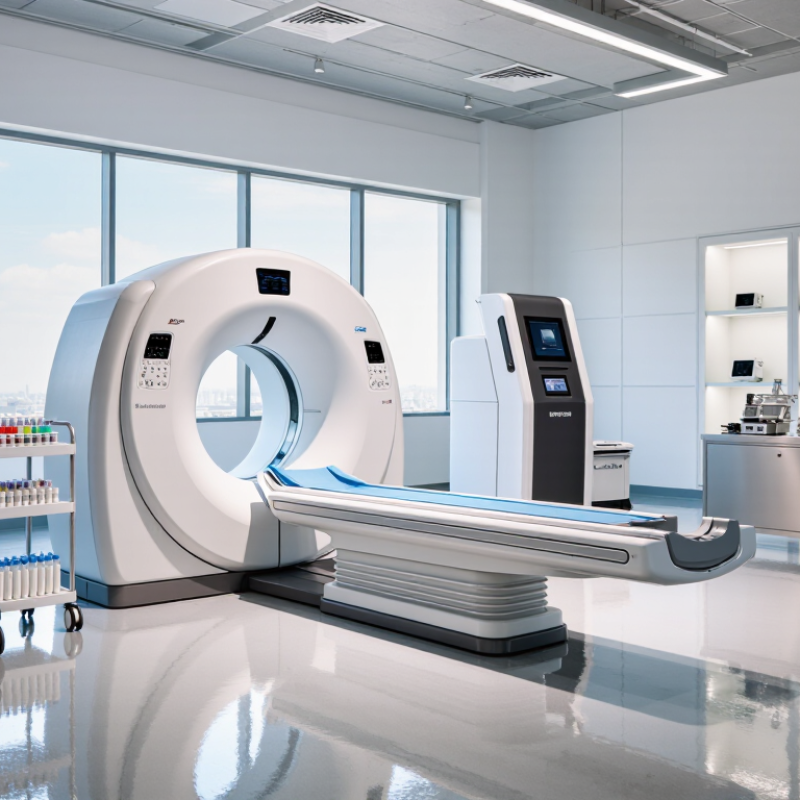
China’s more than 32,000 medical-device manufacturers serve a broad market, though totals vary by reporting date and counting method. NMPA classification applies to individual products, not companies as a whole. One factory may produce simple examination tools and develop higher-risk devices. That distinction matters. Class I devices generally present the lowest risk and follow filing procedures. Class II devices require registration, while Class III devices face the most demanding review because they may pose greater risks.
For domestic products, local authorities handle Class I filing, provincial authorities register Class II devices, and NMPA registers Class III devices. The intended use, design, and technical specifications help determine a product’s class. A label change can matter. So can a new patient population. Manufacturers need evidence and documentation suited to the product and its regulatory pathway. In practice, borderline products can be harder to classify than a chart suggests. Technical changes may also expose gaps in older evidence, a detail that deserves careful review.

China’s 32,000-plus medical device manufacturers operate within the NMPA’s three-class framework. The chart shows the classes’ relative risk levels, not manufacturer counts or market share.
The 1–3 values are an ordinal visualization of the NMPA’s risk categories, not official numerical scores. Class I devices are low risk, Class II are moderate risk, and Class III are higher risk. Classification depends on factors such as intended use and potential risk.
China’s medical equipment market is often described as worth about RMB 1.3 trillion, but that figure depends on what gets counted. Some estimates include low-cost consumables and home-use products; others focus on hospital equipment. The category mix is not a fixed pie.
Diagnostic imaging and in vitro diagnostic equipment form two substantial segments. Imaging systems serve hospitals and clinics, while laboratory analyzers process blood and other samples. A busy lab may run hundreds of tests each hour. Consumables, including syringes, dressings, and test components, add considerable value through frequent replacement. Small items matter.
Patient monitoring, respiratory support, surgical equipment, and rehabilitation devices make up other important groups. Their demand follows hospital investment, aging populations, and care moving beyond large facilities. Yet categories overlap: a monitoring system may be sold with sensors, software, and ongoing service. That makes precise comparisons tricky. A market-share chart can look clean while hiding these differences.
For buyers, category-level growth alone says little about suitability. They should check intended use, maintenance needs, training, and local service capacity. A lower purchase price may not mean lower operating cost. Even a detailed market estimate leaves room for doubt. Definitions, reporting periods, and sales channels can shift the picture.
China’s medical-equipment manufacturers are strongest across several distinct fields, rather than under one universal leader. In imaging, domestic producers supply ultrasound, CT, and MRI systems for hospitals with different budgets and workloads. IVD companies make laboratory analyzers and diagnostic test systems, where accuracy, reagent availability, and consistent quality matter. Monitoring manufacturers focus on bedside devices that track oxygen levels, heart rhythm, and blood pressure. Home-care makers serve a different need, with products such as digital blood-pressure monitors and oxygen concentrators.
The best supplier depends on the clinical setting. A busy imaging department may prioritize service response and replacement parts. A smaller laboratory may care more about simple workflows and dependable consumables. For home-care equipment, clear instructions and easy-to-read displays can make daily use safer. These distinctions are easy to overlook. Market rankings also shift, and product claims should be checked against independent evaluations and relevant registrations.
Tips: Compare the exact model, not just the manufacturer. Ask for clinical performance data, service coverage, training, and spare-part lead times. Check who will maintain the device after installation. A low purchase price can become costly if support is slow.
Company and brand names are intentionally omitted. This table compares major medical-device manufacturing segments and representative product categories; it is not a company ranking or market-share assessment.
| Manufacturing segment | Representative products | Typical applications | Key technical considerations | Regulatory and quality context |
|---|---|---|---|---|
| Medical imaging | Ultrasound systems, computed tomography (CT) scanners, magnetic resonance imaging (MRI) systems, and digital X-ray equipment | Diagnostic imaging in hospitals, imaging centers, and other clinical settings | Image quality, detector and transducer performance, software, system integration, reliability, and service support | Device classification and registration requirements depend on the specific product and its intended use. Manufacturing quality systems are an important part of medical-device production. |
| In vitro diagnostics (IVD) | Clinical chemistry, immunoassay, hematology, molecular diagnostic, and point-of-care analyzers; associated reagents and consumables | Testing patient specimens to support screening, diagnosis, and monitoring of health conditions | Analytical accuracy, precision, sensitivity, specificity, test throughput, reagent stability, and compatibility between instruments and reagents | IVD analyzers, reagents, and test systems are regulated according to their product type and intended purpose; applicable registration or filing requirements can differ by product. |
| Patient monitoring | Bedside multiparameter monitors, pulse oximeters, electrocardiographs, and ambulatory monitoring equipment | Tracking physiological measurements in hospitals, clinics, emergency care, and selected home-care settings | Measurement accuracy, alarm performance, continuous operation, connectivity, data handling, and usability in the intended care environment | Applicable regulatory requirements vary with device function, intended use, and risk classification. Electrical safety and electromagnetic compatibility are relevant considerations for many electronic devices. |
| Home care and personal health devices | Oxygen concentrators, positive airway pressure devices, blood-pressure monitors, blood-glucose meters, and thermometers | Home treatment, self-measurement, and ongoing management of certain health conditions | Ease of use, measurement or therapy performance, maintenance, patient safety, clear instructions, and suitability for home environments | Regulatory obligations depend on the device and its intended medical purpose. Products intended for home use still require appropriate quality controls and user information. |
China’s medical equipment market includes manufacturers with very different product strengths and operating scales. One large, diversified supplier serves hospitals with patient monitors, ultrasound systems, anesthesia equipment, and other clinical devices. Its broad catalog can simplify procurement across departments, but a wide range does not guarantee equal depth in every category. Buyers should compare specific models, service coverage, and training requirements.
A second type of manufacturer concentrates on advanced medical imaging, including CT, MRI, and molecular imaging systems. These products require substantial installation planning, room preparation, and specialist support. Their scale is often visible in complex projects and research investment rather than the number of small devices sold. A hospital evaluating imaging equipment should examine image quality, workflow integration, maintenance access, and lifecycle costs. Impressive specifications alone are not enough.
A third profile focuses more heavily on home-care and primary-care products, such as blood-pressure monitors, oxygen equipment, and thermometers. These devices are generally more compact and easier to distribute through retail and community-health channels. That difference matters. It can make products accessible to households, though the portfolio may be less centered on large hospital systems. Comparing these manufacturers is not entirely neat: revenue, product breadth, export reach, and installed equipment measure scale differently. A careful assessment starts with the intended setting and the support available after purchase.
China’s leading medical-equipment manufacturers are best assessed through revenue, R&D intensity, and export performance. The China Medical Device Blue Book 2024 estimated China’s medical-device market at about RMB 1.27 trillion in 2023. That figure reflects market demand, not any single manufacturer’s sales. The distinction matters.
Revenue indicates scale, but product mix and recurring service income also deserve attention. For R&D, compare audited annual reports using R&D spending as a share of revenue, alongside new product registrations. China Customs’ 2023 trade statistics put medical-device exports at roughly US$40 billion. Export growth can signal international reach, yet does not prove consistent quality or strong after-sales support. A limitation in my first-pass comparison: public data rarely separates equipment revenue cleanly from other medical-device sales.
Tips: Compare several years, not one reporting period. Check whether export figures cover finished equipment, components, or both. That detail can change the ranking.