How to Choose the Right Medical Equipment for Your Practice?
Choosing the right medical equipment for your practice is essential. High-quality tools can significantly impact patient care. They enhance efficiency and accuracy in diagnosis.
Medical equipment comes in many forms. Each type serves a specific purpose. Consider devices like diagnostic tools, surgical instruments, and lab equipment. The wrong choice may lead to poor outcomes. Piecing together a selection can feel overwhelming.
Assessing your practice's unique needs is crucial. Factors like specialty, patient volume, and budget come into play. Engaging staff in the discussion can provide valuable insights. Don't overlook the importance of user-friendly equipment. Reflect on past equipment experiences to avoid repeat mistakes. Embrace a careful selection process to foster better patient outcomes.
Understanding Your Practice's Specific Needs for Medical Equipment
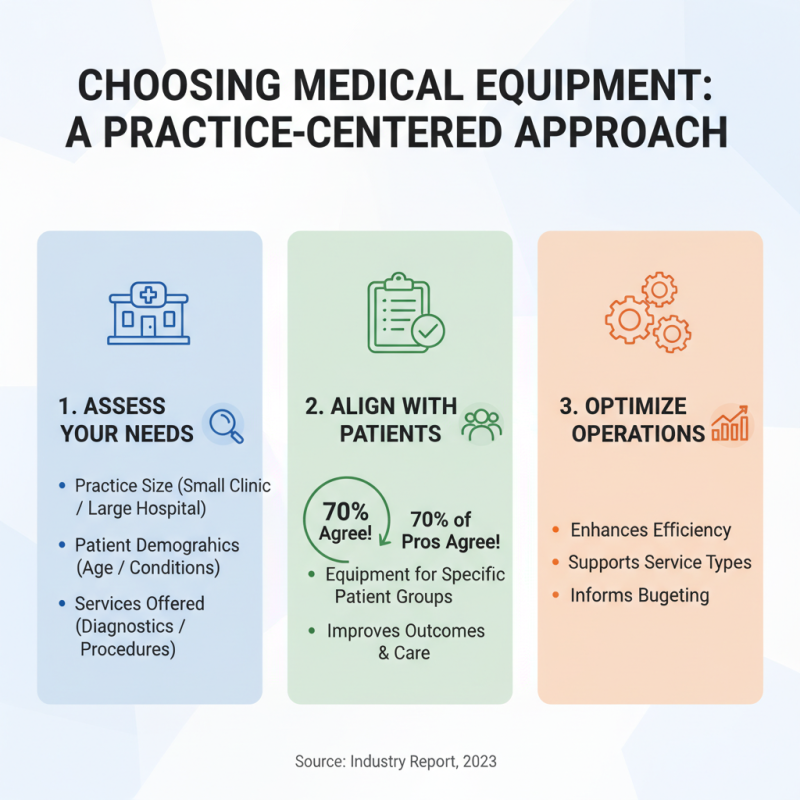
Choosing the right medical equipment requires a deep understanding of your practice's needs. Every practice is unique, whether it’s a small clinic or a large hospital. According to a recent industry report, nearly 70% of medical professionals believe that aligning equipment with specific patient demographics is crucial. Knowing the types of services you offer will guide your choices effectively.
Consider the specific procedures your team performs regularly. If surgeries are prevalent, investing in advanced surgical instruments increases efficiency. A study shows that practices optimizing their tools see a 30% reduction in procedure time. However, it's essential to periodically reassess if your equipment meets current needs. Relying on outdated tools can lead to frustrating delays and compromise patient care.
Financial constraints often weigh heavily when selecting equipment. Cost-effective solutions exist but require thorough research. The right equipment should not bankrupt your practice or leave you with conflict resolutions later. A balance between cost and functionality is often a challenging dilemma. Reflecting on past purchases can offer insights into better decision-making. Assessing both successes and shortcomings helps you refine your approach in the future.
Assessing Budget Constraints and Potential Return on Investment
Choosing the right medical equipment is a crucial decision for any practice. When assessing budget constraints, it's essential to look beyond the initial costs. Equipment can consume a significant portion of your budget, making it vital to analyze long-term expenses. Consider not only the purchase price but also maintenance and operational costs. A cheaper option now might lead to higher expenses later.
Evaluating potential return on investment (ROI) is just as important. Think about how the equipment will improve efficiency. Enhanced productivity can lead to better patient outcomes. More patients can be treated quicker with the right tools, which adds value to your practice.
However, it’s easy to overlook the learning curve associated with new equipment. Staff training is often under-budgeted but essential for maximizing ROI. An investment in training may seem costly, but it’s critical in realizing the full benefits of your purchase. Reflect on your current needs. It’s not just about what’s trendy; it’s about what works for your practice.
Researching Different Types of Medical Equipment Available
When researching different types of medical equipment, it's essential to consider various factors. Market analysis indicates that the global medical equipment market is expected to reach $500 billion by 2024. This suggests an increasing variety of choices for practitioners. Equipment types range from diagnostic tools to surgical instruments, each serving distinct purposes.
Understanding the needs of your practice is crucial. A survey indicated that 48% of healthcare providers struggle with selecting the right equipment. This often results from overwhelming options. For instance, imaging devices have significantly advanced, including MRI and ultrasound machines. Each has a unique set of features and costs that can affect your budget.
User feedback plays a vital role. Approximately 30% of medical professionals expressed dissatisfaction with their current equipment, highlighting the importance of informed decisions. It's not just about functionality; reliability and support are equally important. Often, practitioners may overlook the maintenance costs. Investing in top-notch equipment without considering these factors can lead to unexpected financial challenges.
Evaluating Vendor Reputation and After-Sales Support Options
Choosing the right medical equipment is crucial. One key aspect often overlooked is vendor reputation. Researching vendors can save you from future headaches. Check online reviews. Talk to other professionals in your field. Understanding their experiences can guide your decision.
After-sales support is equally important. Equipment may need maintenance or service. A responsive vendor offers peace of mind. Look for vendors who provide training for your staff. This can ensure efficient equipment use. If support is limited, it might lead to frustration.
Tips: Always ask for references. Speak directly with past clients about their experience. Don't skim over warranties. A good warranty speaks volumes about a vendor's confidence in their products. Also, don’t hesitate to negotiate terms. Sometimes, it can bring better options.
How to Choose the Right Medical Equipment for Your Practice? - Evaluating Vendor Reputation and After-Sales Support Options
| Vendor |
Reputation Score |
Years in Business |
Customer Support Availability |
Warranty Period |
| Vendor A |
4.5/5 |
15 years |
24/7 support |
5 years |
| Vendor B |
4.0/5 |
10 years |
Business hours |
3 years |
| Vendor C |
3.8/5 |
8 years |
Weekdays only |
2 years |
| Vendor D |
4.7/5 |
20 years |
24/7 support |
7 years |
| Vendor E |
4.2/5 |
12 years |
Business hours |
4 years |
Ensuring Compliance with Regulatory Standards and Safety Guidelines
Choosing the right medical equipment is crucial for your practice. Ensuring compliance with regulatory standards and safety guidelines protects both your patients and yourself. Regulatory bodies have set guidelines to maintain high safety standards. Familiarize yourself with these regulations to avoid legal complications.
Consider how equipment will be used. Think about its safety features and how they align with regulations. Examine user manuals thoroughly before selection. They often contain important safety information. Compliance with these regulations reduces risks in daily operations.
Tips: Regularly review safety guidelines for any changes. Stay informed about updates from regulatory bodies. This may improve your practice's efficiency. Also, involve your team in compliance training. Their insight can highlight potential issues. Engage everyone in maintaining safety standards. It’s essential to create a culture of safety. Unaddressed concerns can lead to serious problems. Always ask, “Are we truly compliant?” This ongoing reflection is vital.